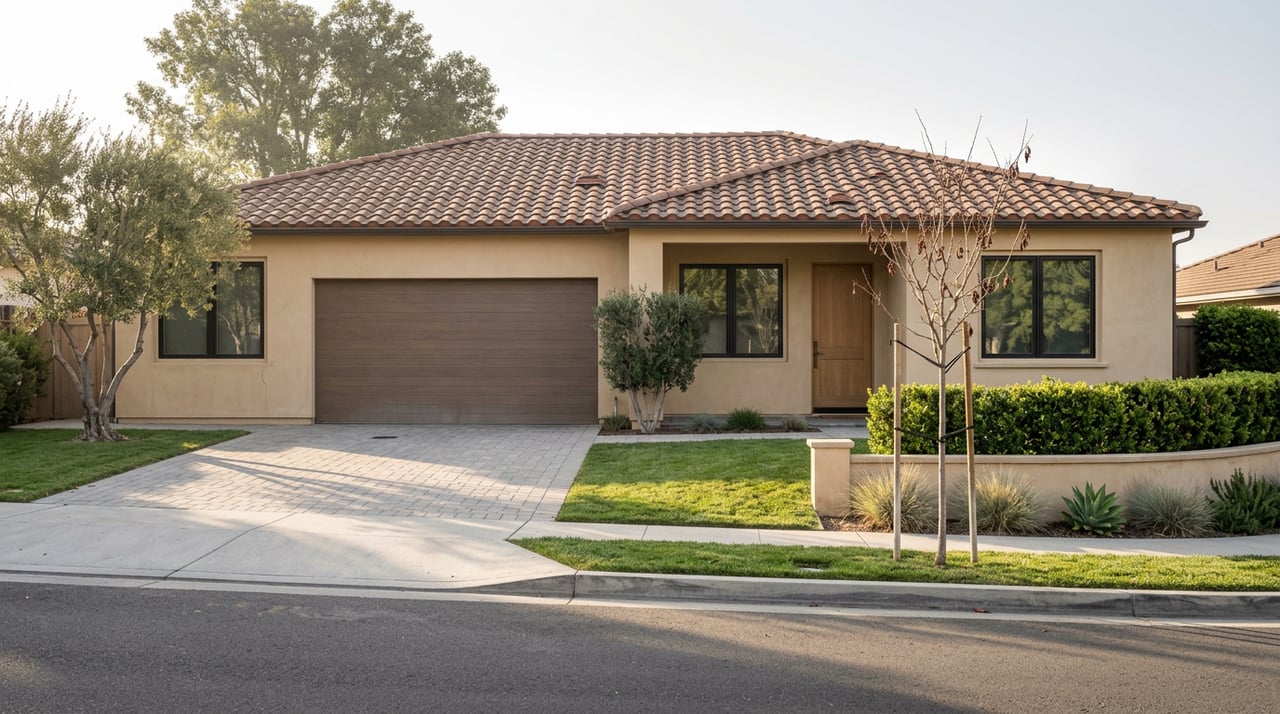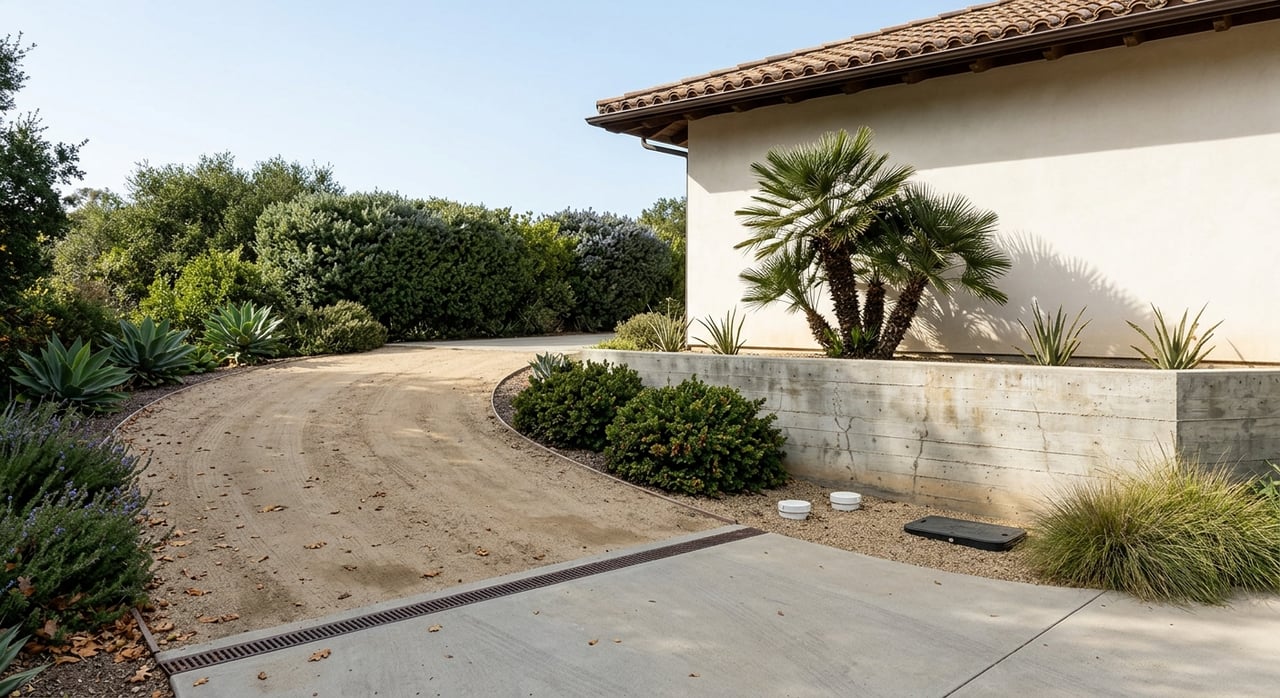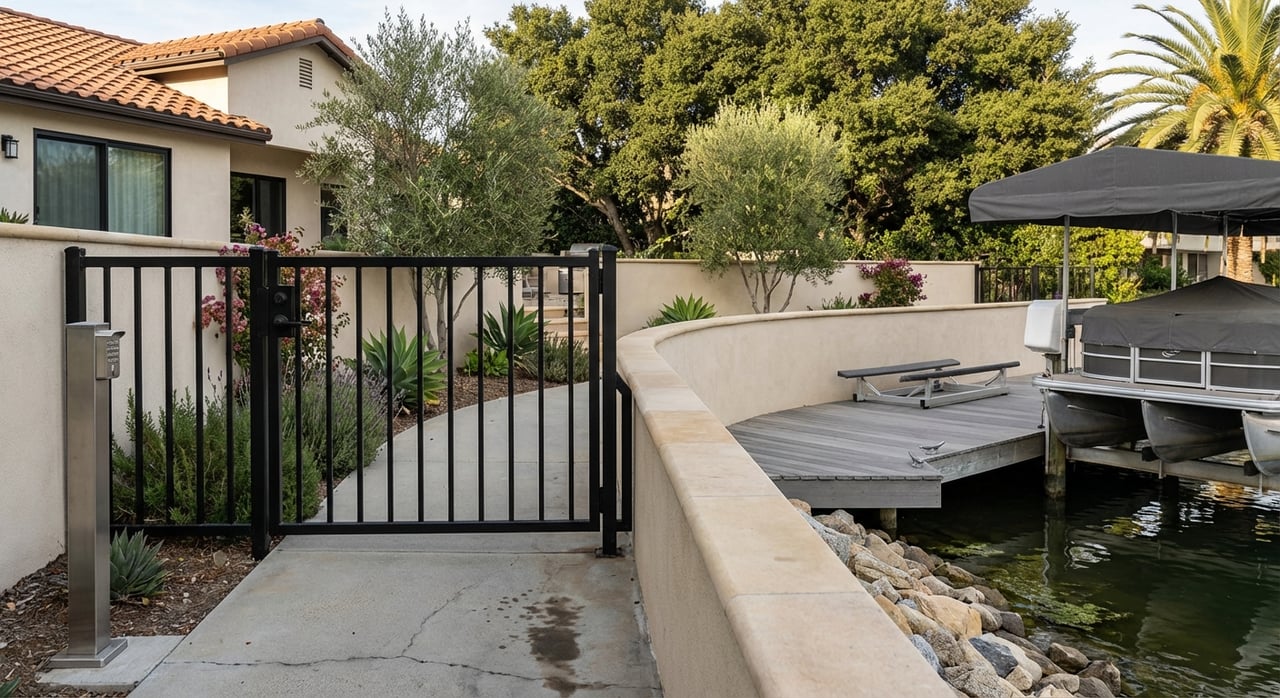
For buyers considering a cottage on Los Rios Street, a Mills Act contract can affect both the tax bill and the obligations that come with the property. Buyers comparing historic properties here may encounter the potential tax benefit. The county assessor's office has told the city that a Mills Act contract can lower a property tax assessment by 15 to 60 percent. A key detail, according to California's Office of Historic Preservation, is that the contract runs with the house, not the owner who negotiated it. Buy a Mills Act property and you are not claiming a discount someone else earned. You are stepping into a legal agreement with the city that the seller signed, and it does not expire when escrow closes.
That distinction matters more in San Juan Capistrano than in most Orange County cities, because the eligible inventory here is unusually concentrated and unusually old.
The tax break is a formula, not a coupon
The Mills Act works by changing how a county assessor values a property. Instead of assessing based on what you paid for the home, the assessor uses an income-capitalization approach that estimates what the property could generate in rental income, then subtracts allowances for maintenance. California's Office of Historic Preservation describes this as the core mechanism of the statewide program, and notes that Mills Act contracts run for an initial term of 10 years and automatically renew each year, creating a rolling term that never gets shorter.
That structure means the tax benefit is not fixed. It moves with market conditions and rental comparables, and the Santa Clara County Assessor describes savings ranging as widely as 20 to 70 percent from one property to the next. A buyer comparing two homes at the same list price in San Juan Capistrano cannot assume the one with a Mills Act contract carries a bigger discount. The formula runs independently of the sale price, which is exactly what makes it useful for long-term owners and confusing for anyone trying to read it off a listing sheet.
Eligibility is narrower than "old house"
Not every historic-looking property in San Juan Capistrano qualifies. The city restricts Mills Act contracts to buildings already listed on its own Inventory of Historic and Cultural Landmarks, a designation that is separate from and stricter than a National Register of Historic Places listing. San Juan Capistrano has 13 sites or districts on the National Register, but National Register status alone does not put a property on the city's inventory or make it Mills Act eligible. The two lists overlap heavily but are not identical, and a buyer relying on "it's on the National Register" as shorthand for "it qualifies for the tax contract" is working from an assumption the city itself does not make.
The inventory concentrates in a few identifiable pockets. According to the city's own description, the IHCL includes the Mission and downtown buildings, the Los Rios Street Historic District east of the train depot, homes in the early 20th century Mission Hill-Mission Flats neighborhood east of the library, several 18th and 19th century adobe buildings, and 19th and 20th century ranch and farmhouses. Los Rios Street carries the heaviest concentration of eligible stock. Thirty-one of the buildings on Los Rios Street and the surrounding area were listed on the National Register in 1983, and the district is generally described as the oldest continuously occupied residential street in California, anchored by three surviving adobe structures known as the Rios, Montanez, and Silvas adobes.
The city adopted a formal stance on this inventory in 1996, when it took on the motto "Preserving the Past to Enhance the Future." That motto is not decorative. It shows up in how the city administers Site Plan Review, the process an owner must go through before altering, adding onto, relocating, or demolishing anything on the IHCL. A landmark designation is not a plaque. It is a permitting relationship that outlives the person who agreed to it.
What transfers at closing
Here is how the contract works. State guidance on the Mills Act is explicit that a contract is binding on all successors in interest, meaning a buyer inherits the same rights and obligations as the original owner who signed it. There is no opt-out at the closing table. If the home you are buying carries a Mills Act contract, you are also buying:
- A 10-year rolling agreement with the city that renews automatically each year
- A Site Plan Review requirement before most exterior alterations, additions, relocations, or demolitions
That last point deserves attention from anyone planning a heavy renovation. A buyer who intends to gut a Los Rios Street cottage and modernize it top to bottom is not just facing city permitting timelines. They are potentially triggering a review of whether the home still meets the preservation standard the contract was built around, on a property where the tax benefit was priced into the deal they just closed.
What the citywide median actually mixes together
San Juan Capistrano's overall home values have been rising through 2026. In the second quarter of the year, the median home sale price across the city was $1.6 million, up 9.2 percent year over year, with a median price per square foot of $719, according to PropertyShark's tracking of local sales. For comparison, the same data set put the Orange County median at $1.2 million over the same period, meaning San Juan Capistrano is trading at a real premium to the county it sits in.
That $1.6 million median is a blend. It includes newer construction off Ortega Highway with no landmark restrictions and no special tax formula, sitting next to a 19th century farmhouse on the IHCL where the tax bill, the renovation rules, and the contract obligations follow a completely different logic. The median tells a buyer what a typical closing looks like in dollar terms. It says nothing about which of those two very different ownership experiences they are actually walking into.
| Typical non-designated home | Home on the IHCL with a Mills Act contract | |
|---|---|---|
| Tax basis | Purchase price under Proposition 13 | Income-capitalization formula set by the county assessor |
| Exterior changes | Standard building permit | Site Plan Review required for alterations, additions, relocation, or demolition |
| Contract term | None | 10-year rolling term, renews annually |
| Effect of a sale | No transfer obligation | Binds the new owner automatically, same terms as the seller had |
Where this shows up before you make an offer
The city maintains a second, lower-stakes list worth knowing about if the Mills Act conversation interests a buyer: the Buildings and Sites of Distinction List, described by the city as properties important to the community that could potentially be added to the IHCL with the owner's concurrence. A home on that list is not yet landmark-designated and carries no Mills Act eligibility today, but it signals that a future designation conversation is plausible. Buyers weighing a Distinction-list property are weighing a different kind of optionality than buyers looking at a home already on the IHCL, and the difference is worth asking about before writing an offer, not after.
Anyone seriously pursuing a Mills Act contract on an eligible property, or trying to confirm whether a specific address already carries one, works through the city's Development Services division rather than guessing from a listing description. The city's Mills Act guide outlines the application path in detail, and the county assessor's actual reduction percentage for a specific parcel is a conversation the city can help route correctly.
FAQ
Does a National Register listing automatically make a home Mills Act eligible in San Juan Capistrano? No. The city restricts Mills Act contracts to properties on its own Inventory of Historic and Cultural Landmarks. The IHCL overlaps with the city's 13 National Register sites and districts but is a separate, locally administered list.
What happens to a Mills Act contract when the home sells? It transfers automatically. State guidance is clear that a Mills Act contract binds all successors in interest, meaning a buyer takes on the same rights and obligations the seller had, without needing to sign anything new.
A historic tax break in San Juan Capistrano is tied to a legal relationship with the city. Understanding its terms before an offer goes in matters as much as understanding the number on the tax bill.
For sellers holding a landmark property, presenting that history accurately, and marketing it to buyers who actually want the obligations that come with it, takes a different kind of preparation than a standard listing. The Twinning Team works with design-forward staging and creative production built for exactly this kind of property story. Receive exclusive listings by reaching out directly.
This article is general information, not legal, tax or financial advice. Consult a qualified professional about your situation.