Shopping for a luxury home in Rancho Santa Fe and not sure where conforming financing ends and jumbo begins? You are not alone. High purchase prices can shift you into different lending rules that affect your rate, down payment, and even how the appraisal is handled. In this guide, you will learn the 2024 limits for San Diego County, what “jumbo” means in practice, and how to prepare a strong plan for a smooth close. Let’s dive in.
What counts as “jumbo” in San Diego County
A loan becomes jumbo when the mortgage amount is above the Federal Housing Finance Agency (FHFA) conforming loan limit for your county and property type. Conforming loans can be bought or guaranteed by Fannie Mae and Freddie Mac. Jumbo loans cannot, which means private investors or portfolio lenders set different rules and pricing.
For 2024, San Diego County is a designated high-cost area. That means the one-unit conforming limit here is set at the high-cost ceiling.
2024 conforming limits at a glance
- 1-unit in San Diego County: $1,149,825
- 2-unit in San Diego County: $1,472,025
- 3-unit in San Diego County: $1,780,200
- 4-unit in San Diego County: $2,211,600
If your loan amount is above the applicable number for your property type, you are in jumbo territory.
Why this matters in Rancho Santa Fe
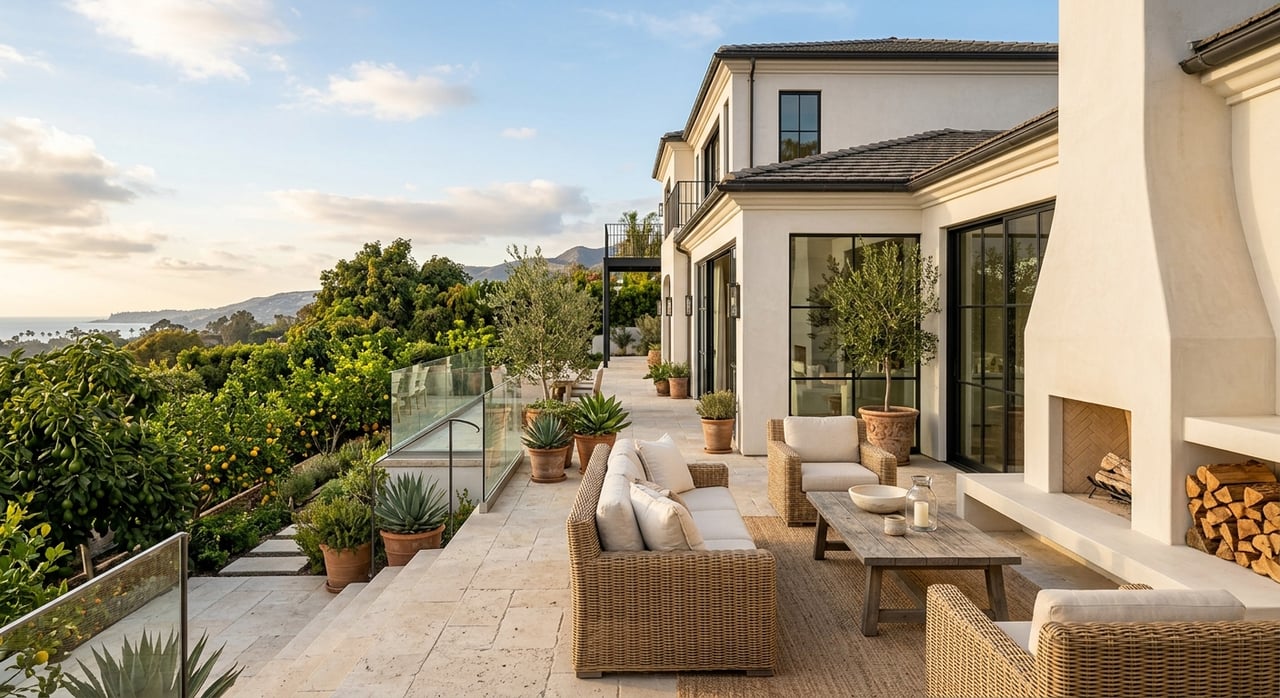
Rancho Santa Fe is an ultra-high-end market. Many single-family homes here exceed the one-unit conforming ceiling of $1,149,825 in 2024. In practical terms, you will likely use jumbo financing for most detached home purchases in Rancho Santa Fe.
Coastal North County is more mixed. In Del Mar, Solana Beach, Encinitas, and Carlsbad, some homes can be financed with conforming loans. Many newer or luxury properties still require jumbo financing. A quick price-to-limit check will tell you which rules apply to your target home.
How jumbo loans differ from conforming
Jumbo loans are designed for larger balances, so lenders take a closer look at risk and liquidity. Here is what typically changes.
Down payment and loan-to-value
- Conforming loans can allow higher loan-to-value ratios, sometimes up to 97 percent for certain borrowers and programs.
- Jumbo loans usually require more cash in. Plan for 10 to 25 percent down, with 20 percent a practical target for strong pricing. Standard PMI is not common on jumbos, so lenders manage risk by limiting loan-to-value.
Credit, DTI, and reserves
- Conforming loans often approve a wide range of credit scores with pricing adjustments.
- Jumbo programs generally expect higher credit scores, often 700 to 760+ for best terms. Lenders may cap debt-to-income near 43 to 50 percent, and they usually require 6 to 12 months of cash reserves or more for complex files.
Rates and pricing
- The rate spread between jumbo and conforming changes with market conditions. At times, jumbo pricing can be close to conforming and even competitive for strong borrowers.
- Always compare offers from several lender types and evaluate the full cost, including rate, points, and lender fees.
Documentation and income verification
- Expect more documentation for jumbo loans. Full tax returns, W-2s or 1099s, bank statements, and detailed asset verification are common.
- If your income is complex, some lenders offer alternative documentation or non-QM jumbo options. These can help certain buyers but often come with higher costs.
Appraisals on luxury estates
High-end properties in Rancho Santa Fe can be hard to value with traditional comps. Unique architecture, large lots, custom finishes, and limited recent sales can make the appraisal more complex.
What that means for you: appraisals may come in below contract price more often than entry-level homes. If that happens, you may face renegotiation, a larger down payment, or a request for a second opinion.
What lenders may require
- Appraisers with luxury experience and detailed narratives.
- Multiple comparable sales plus additional valuation approaches when needed.
- A second appraisal or a higher down payment if the valuation is tight.
How to prepare for the appraisal
- Allow extra time in your timeline for appraisal scheduling and any follow-up.
- Share a thoughtful upgrades list and relevant neighborhood comps with your agent and lender for the appraiser’s review.
- Have contingency strategies ready, such as additional cash or pricing adjustments if an appraisal gap appears.
Lending options that fit Rancho Santa Fe buyers
There is no single “best” jumbo option. Your profile and goals drive the right fit.
- Portfolio lenders and private banks. These lenders keep loans on their books and can be flexible with unique properties or complex income.
- Community banks and credit unions. Local knowledge can help on valuation and underwriting, and pricing can be competitive.
- Non-QM jumbo. Useful for alternative documentation like bank statements or asset depletion, typically at a higher cost.
- Private or bridge financing. Helpful for speed or when buying before selling, with higher rates but faster execution.
- Cash purchases. Common in ultra-luxury segments and can strengthen your negotiating position.
- Piggyback structures. Less common today, but historically used to manage loan-to-value without mortgage insurance on large balances.
A practical game plan for buyers
Set your process up for success before you write an offer.
- Get preapproved for a jumbo product early. Confirm maximum loan size, required reserves, documentation, and estimated turn times.
- Shop multiple lender types. Compare national lenders, portfolio banks, credit unions, and experienced jumbo brokers.
- Assemble documentation. Two years of tax returns, recent bank statements showing reserves, asset documentation, and clear explanations for large deposits.
- Plan for costs. Budget for potential rate buydowns, additional reserves, and appraisal or second appraisal fees if needed. Compare official loan estimates.
- Protect your timeline. Build in time for appraisal and any follow-up analysis on unique features or comps.
- Prepare a negotiation strategy. Consider a higher down payment or limited contingencies if competition is strong.
- Coordinate property specifics early. Address title, HOA items, coastal zone considerations, septic or sewer, well rights, and any detached accessory dwellings that could affect valuation or underwriting.
Buying in Rancho Santa Fe is about precision. When you pair the right jumbo strategy with a property that fits your lifestyle, you can move with confidence and close cleanly.
If you are exploring estates across Rancho Santa Fe and coastal North County, we can guide your search, align your financing strategy with the property, and help you present a compelling, low-risk offer. Reach out to The Twinning Team for discreet advice and curated options.
FAQs
What is the 2024 jumbo threshold in San Diego County for a one-unit home?
- Any loan amount above $1,149,825 is considered jumbo for a one-unit property in San Diego County in 2024.
How do jumbo down payments in Rancho Santa Fe typically compare to conforming loans?
- Jumbo loans commonly call for 10 to 25 percent down, with 20 percent a practical benchmark for competitive pricing.
Are jumbo mortgage rates always higher than conforming rates in San Diego?
- Not always. The spread changes with markets, and well-qualified borrowers can sometimes secure jumbo pricing close to or on par with conforming.
What should I expect during a luxury home appraisal in Rancho Santa Fe?
- Expect more scrutiny, potential for fewer comparable sales, and the possibility of additional documentation or a second appraisal if values are tight.
Which lender types should high-end buyers consider for jumbo financing?
- Compare portfolio and private banks, community banks and credit unions, experienced jumbo brokers, and non-QM options if your income or assets are complex.